JagOwl Performance System™ — Death Care Vertical
Holding the room is a professional discipline.
During a family's greatest time of need, you are the one they are counting on.
Can You Hold the Room?
Explore the framework first
Ready to take the profile
What CLN stands for
Compassionate
Load
Navigation
Explore the full framework below
The JagOwl Theorem
We are not selling training.
We are building the operating system for human performance in the arrangement room.
The Operating Premise
Holding the room is not merely a communication skill that training teaches.
Load reveals who can stabilize the room.
The Final Truth
Anyone can offer condolences.
Not everyone can lead a family through the hardest decision of their lives.
CLN is the operating system for the professional who can.
The JagOwl Death Care Performance Profile™
15 Scenarios. One Honest Answer.
When emotions rise.
When families disagree.
When decisions become difficult.
15 realistic family conversations. Discover how you perform when it matters most.
Organizations seeking team-wide diagnostics should use the JLLD Deathcare Division pilot pathway.
Free. No login required. Your JagOwl Profile™ is generated instantly.
For Organizations
For Organizations: Visit JLLD Deathcare Division →Funeral homes, cemetery teams, and regional leaders seeking team-wide diagnostics and implementation support.
Every Conversation in This Profession Carries Load
The operating system for the professionals who carry the Load.
Family Service Counselor
Emotional + Relational Load
Sits across from a family in acute grief and must guide them through the most complex financial and logistical decisions of their lives — in a single conversation.
→ Take the ProfileFuneral Director
Cognitive + Emotional Load
Manages legal requirements, logistics, and family expectations simultaneously — under grief, under time pressure, and often under the observation of a fractured family.
→ Take the ProfileAdvance Planner
Financial + Cognitive Load
Guides a living, healthy family member through planning their own death — navigating avoidance, discomfort, and financial anxiety to reach a decision that protects the family they love.
→ Take the ANLN™ ProfileSales Manager
Dual-Environment Load
The only professional responsible for both environments simultaneously — coaching counselors through grief-laden conferences and planners through pre-need resistance, while absorbing the accumulated Load of the entire team.
→ Take the ProfileLocation Manager
Relational + Cognitive Load
Responsible for the performance culture of an entire location — ensuring every professional on their team can hold the room, sustain compassion under volume, and deliver consistently across every family interaction.
→ Take the ProfileCorporate Trainer
System-Wide Load
Licensed to deploy the JagOwl Performance System™ across an entire organization — the internal architect of a culture where Compassionate Load Navigation™ is the standard, not the exception.
→ Take the ProfileThe Operating System
The JagOwl Performance System™ is the first operating system designed to measure, diagnose, and elevate performance under emotional and operational load in the death care profession.
The Category
What the industry teaches vs. what families actually need.
Empathy training
Teaches how to feel — not how to lead.
Load Diagnostics
Read the room in the first five minutes.
Arrangement scripts
Follows a process regardless of the family.
Cognitive Offloading
Carry the complexity so they don't have to.
Product knowledge
Focuses on what to sell, not who is in the room.
Trust Architecture
Build safety before you build a plan.
Passive listening
Hears the words. Misses the Load.
Decision Progression
Move families from paralysis to peace.

The Four Forces of Load
Emotional · Cognitive · Relational · Financial
The Category Distinction
Conversation management teaches you what to say. CLN reveals the forces shaping the room before you say anything.
Every AN and PN training program in this profession teaches conversation management — scripts, objection handling, closing technique. The implicit assumption is that the professional's job is to move a family or family member toward a decision.
CLN teaches something categorically different: the ability to diagnose and remove the forces that are preventing a decision from being made at all.
Conversation management is for the conversation. CLN is for the room.
The Load Definition Protocol™
Load is not a feeling. It is a measurable force.
A Certified Load Navigator™ does not "read the room" by intuition. They diagnose four distinct, compounding forces that restrict a family's ability to make decisions — and deploy the precise strategy each one requires.
Emotional Load
The Baseline
The physiological and psychological impact of acute grief, shock, or numbness. It floods the amygdala, triggering fight/flight/freeze responses and severely restricting the prefrontal cortex's ability to process logic.
Observable signal: Uncontrollable weeping, flat affect, inability to speak, or sudden bursts of anger.
Cognitive Load
The Processing Burden
The mental overwhelm caused by the sheer volume of new, complex information required to finalize an arrangement — exceeding the working memory of a brain already impaired by grief.
Observable signal: Asking the same question repeatedly, staring blankly at the GPL, confusion over standard terminology.
Relational Load
The Social Friction
The tension, conflict, or unspoken power dynamics between surviving family members. It diverts cognitive resources away from honoring the deceased toward managing interpersonal defense mechanisms.
Observable signal: Siblings arguing over disposition, a dominant member silencing the next-of-kin, heavy uncomfortable silences.
Financial Load
The Resource Anxiety
The acute stress and fear related to cost, particularly when the death was unexpected. It triggers survival anxiety, often masking itself as anger, defensiveness, or extreme indecision.
Observable signal: Immediate demands for the cheapest option, defensive posture when prices are introduced, quiet panic.
The Three-Tier Load Scale
Level 1: Baseline
Anticipated / Prepared
Expected death, pre-arrangements exist. Family is grounded. Cognitive function largely intact.
Strategy: Facilitation & Validation
Level 2: Elevated
Unprepared / Complex
No pre-planning, or unexpected death of an older individual. Significant cognitive fatigue. Minor to moderate disagreements.
Strategy: Pacing & Translation
Level 3: Critical
Traumatic / High Conflict
Sudden, tragic, or out-of-order death. High probability of deep family fracture or severe financial distress.
Strategy: Triage & Anchoring
The Situation
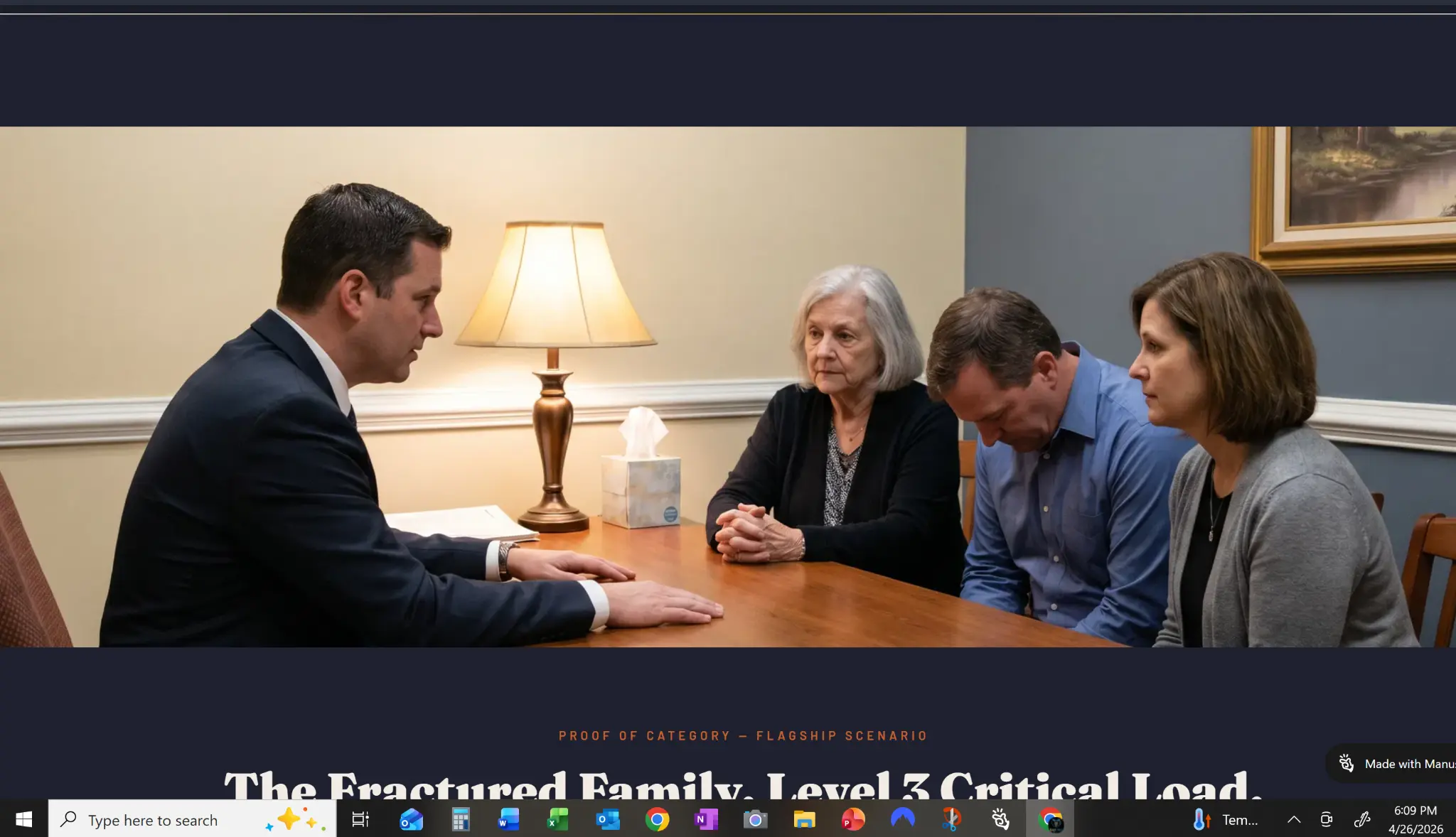
A 71-year-old man died unexpectedly of a cardiac event at 6:42 AM on a Tuesday. By 10:15 AM, his wife and two adult children are seated across from a Family Service Counselor. There is no pre-arrangement. There is no will on file. There is no consensus on disposition.
The counselor has 90 minutes. The family has never done this before. All four Load types are active simultaneously. This is not an edge case — this is Tuesday morning in the arrangement room of any funeral home in America.
The Load Level
Level 3 Critical Load is the arrangement room at its most demanding. All four Load types are active. The family's decision-making capacity is severely compromised. An untrained professional will either freeze, over-explain, or push — all of which make the situation worse.
The Family Dynamic
She is present in body but not in decision-making capacity. She will agree to whatever her children decide, which means the real authority in the room is contested — not clear.
He has not cried. He is managing his grief through financial control. Every pricing discussion activates his survival anxiety. He will not say he cannot afford it — he will say he does not want to overpay.
She is doing the emotional labor for the entire family. She is the one asking questions, translating for her mother, and managing her brother's silence. She will break before the arrangement is complete.
All Four Loads — Active Simultaneously
This is not four separate problems. It is one room, one family, one professional, and four simultaneous forces pulling in different directions.
Emotional Load
The son has his head down and cannot speak. The mother is dissociated — answering questions with one-word responses. The daughter is the only functional communicator, but she is running on adrenaline, not clarity.
Cognitive Load
The family has not discussed disposition. They do not know the difference between burial and cremation costs. They have not located the will. They are being asked to make six irreversible decisions inside 90 minutes.
Relational Load
The son and daughter disagree on disposition — silently. The mother defers to the daughter, which the son resents. Every question directed at the group triggers a micro-negotiation that the counselor cannot see.
Financial Load
The death was unexpected. There is no pre-arrangement. The son is the breadwinner and is already calculating. The daughter wants to honor her father properly. The gap between those two positions has not been spoken aloud yet.
The Question Every Professional Must Answer
The daughter begins crying before you have introduced yourself. The son has not looked up from the table. The mother is staring at the tissue box.
What do you do next?
The JagOwl Death Care Performance Profile™ puts you inside 15 scenarios like this one. Your profile is generated instantly.
Take the Performance ProfileFree. No login required. Your JagOwl Profile™ is generated instantly.
The CLN Competency Model
Five competencies. Three levels. One standard.
Every competency traces directly to a specific type of Load. Every behavior is observable, measurable, and certifiable.
01
Load Diagnostics
Read the room before you speak.
The ability to rapidly and accurately assess all four Load types within the first five minutes of any family interaction. A CLN designates the room as Level 1, 2, or 3 Load before any paperwork or pricing is introduced.
Novice (Pre-Certification)
Focuses solely on paperwork. Ignores physical cues of distress. Plunges into pricing regardless of emotional state.
Competent (CLN Level)
Executes the 5-Minute Baseline Read. Accurately categorizes Load level. Monitors all five measurable indicators throughout.
Mastery (MJN Level)
Anticipates Load shifts before they occur. Adjusts the physical environment to mitigate rising tension without the family noticing.
The Question Every Professional Must Answer
This is what CLN certification is designed to handle.
The CLN program is the operating system for navigating every Load type simultaneously — deployed before a professional ever faces a real family in crisis.
Explore Certification TiersCLN certification is in final development. Waitlist members receive priority enrollment and early access.
The Certification Pathway
Five tracks. One standard of excellence.
The CLN certification pathway is built for individual professionals who want to diagnose, navigate, and lead under emotional, cognitive, relational, and financial load. Certified Load Navigator™ is the core public credential. Advanced pathways extend that standard for specialized roles, portfolio responsibility, and enterprise stewardship.
Funeral home owners, operators, and regional leaders seeking team-wide diagnostics, pilots, or implementation support should use the JLLD Deathcare Division pathway.

Certified Load Navigator™
Target Audience
Family Service Counselors, Funeral Directors
Admission Requirements
Applicants must demonstrate:
Completion of all CLN core digital academy modules
Successful completion of the JagOwl Death Care Performance Profile™ assessment
Demonstrated proficiency across all five CLN competency dimensions
Minimum passing score on the Load Diagnostics simulation
The CLN™ is the foundational credential of the profession — the standard every at-need practitioner is measured against.
Certified Load Navigators™ diagnose and navigate Level 1 and Level 2 at-need Load scenarios with measurable competency. They execute the 5-Minute Baseline Read, deploy the Safety Anchor, apply Binary Framing to reduce cognitive overload, and guide families from paralysis to informed, confident decisions. The CLN™ is the professional who Holds the room when a family walks through the door.
Anticipatory Load Navigator™
Target Audience
Advance Planners, Pre-Need Counselors
Admission Requirements
Applicants must demonstrate:
Active Certified Load Navigator™ (CLN™) status
Completion of the Anticipatory Load Navigation™ module
Demonstrated proficiency in pre-need conversation psychology
Passing score on the Mortality Avoidance Simulation™
The ANLN™ is the only credential designed specifically for the psychology of planning conversations — where the family hasn’t lost anyone yet, but the Load is already present.
Anticipatory Load Navigators™ are trained for the most psychologically complex conversation in the profession: asking a living person to plan for their own death. They navigate mortality avoidance, anticipatory grief, financial resistance, and family dynamics — building urgency and trust with prospects who are actively avoiding the subject. The ANLN™ is the advance planner who can Hold the room before loss ever occurs.
Certified Load Portfolio Manager™
Target Audience
Sales Managers • Location Managers • Market Leaders
Admission Requirements
Applicants must demonstrate:
Certified Load Navigator™ (CLN) status
Minimum two years of applied field experience
Successful completion of the Dual-Environment Performance Diagnostic™
Demonstrated competency across both At-Need and Pre-Need operations
Successful completion of the Portfolio Leadership Practicum™
The CLPM™ is the operational bridge between individual capability and organizational performance.
Certified Load Portfolio Managers™ oversee performance across both At-Need and Pre-Need environments. They recognize how Load shifts across practitioners, teams, and locations — anticipating fragility, strengthening capability, and sustaining organizational performance before breakdown occurs.
Advanced Load Navigator™
Target Audience
Senior Directors • High-Volume Producers • Elite At-Need Practitioners
Admission Requirements
Applicants must demonstrate:
Certified Load Navigator™ (CLN) status in good standing
Minimum six months of documented at-need field experience
Successful completion of the Level 3 Critical Load XR Simulation™
Demonstrated competency under high-conflict, high-stakes arrangement conditions
AI-scored performance assessment confirming Level 3 Load navigation capability
The ALN™ is the highest standard of individual at-need performance in the profession.
Advanced Load Navigators™ operate where untrained professionals fail. They are certified to navigate Level 3 Critical Load — the most complex, high-conflict, high-stakes arrangement scenarios in the profession — with measurable competency, not just experience. The ALN™ is the credential that defines what elite at-need performance actually looks like.
Master JagOwl Navigator™
Target Audience
Corporate Trainers • Regional VP of Operations • Enterprise Deployment Leaders
Admission Requirements
Applicants must demonstrate:
Advanced Load Navigator™ (ALN) or Certified Load Portfolio Manager™ (CLPM) status
Demonstrated enterprise-level leadership or training responsibility
Invitation from the JagOwl Performance System™ faculty
Successful completion of the Train the Trainer Practicum
Commitment to deploy the JagOwl Performance System™ within a defined organizational scope
The MJN™ is the self-replicating engine of the entire certification architecture.
Master JagOwl Navigators™ are licensed to deploy the JagOwl Performance System™ enterprise-wide. They do not simply hold the room — they build the organizational infrastructure that ensures every practitioner on their team can. The MJN™ is the credential that transforms individual mastery into institutional capability.
Scope of Responsibility
Each tier expands the scope of Load responsibility — from a single arrangement room to an entire organization.
Q4 2026 Launch — Priority Access
Be First When Enrollment Opens.
The CLN certification program launches Q4 2026. Waitlist members receive priority enrollment, early access to curriculum previews, and direct notification before public announcement.
Occasional professional field notes
Stay close to the work.
Receive practical observations about steadiness, clarity, and professional judgment when family conversations become demanding. No certification pitch. No daily noise.
Proof in Practice
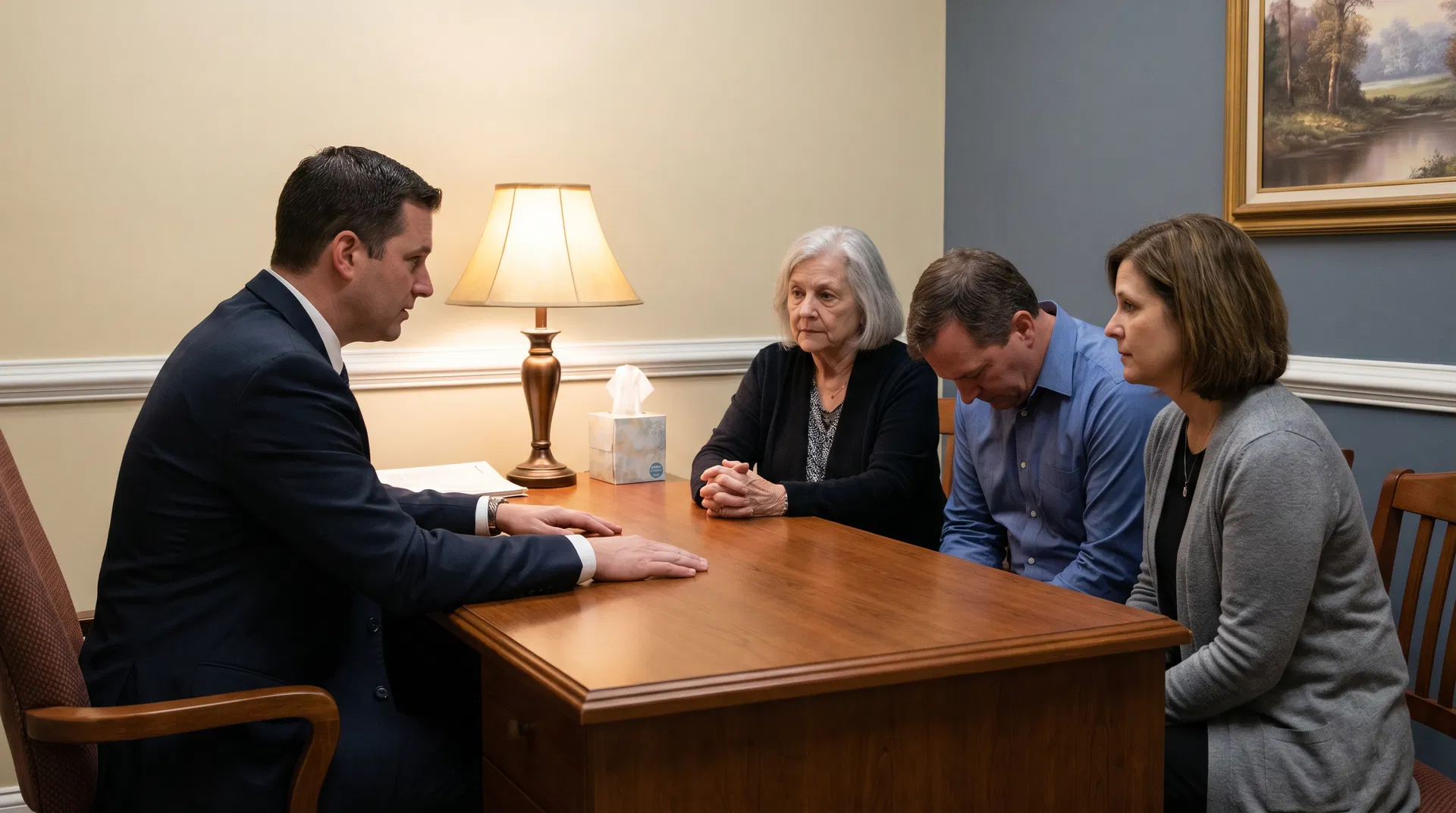
Proof of Category — Flagship Scenario
The Fractured Family. Level 3 Critical Load.
Sudden death. No pre-arrangements. No life insurance. A widow in shock. Siblings in active conflict. This is the scenario that breaks untrained professionals — and defines the CLN.
✗ The Traditional Arranger
Offers condolences and asks: 'What were you thinking of doing for Robert?' — an open-ended question to a family in shock.
Hands a 12-page General Price List to the widow. Cognitive Load exceeds her working memory. She begins to cry.
Unable to manage the conflict, the arranger steps out: 'Why don't I give you some time to talk it over?' The family is abandoned to their trauma.
A direct cremation is chosen out of financial panic. David leaves with deep resentment. The family is fractured. Trust is lost.
✓ The Certified Load Navigator™
Diagnoses Level 3 Critical Load. Deploys the Safety Anchor: 'My job is to carry that weight for you. We will take this one step at a time.'
Trust ArchitectureValidates David's intent (honor) and Emily's intent (protection) separately. Neutralizes the conflict by addressing the need behind the anger.
Emotional StabilityAddresses Financial Load head-on. Uses Binary Framing: 'Are we leaning toward a traditional burial, or cremation?' — A or B, nothing more.
Cognitive OffloadingBridges both needs: a private viewing before cremation. David gets his goodbye. Sarah is financially protected. The family leaves in peace.
Decision ProgressionThe Intellectual Foundation
The Books Behind the Framework
Daniel L. White's body of work establishes the research and practice foundation that the CLN framework is built upon.
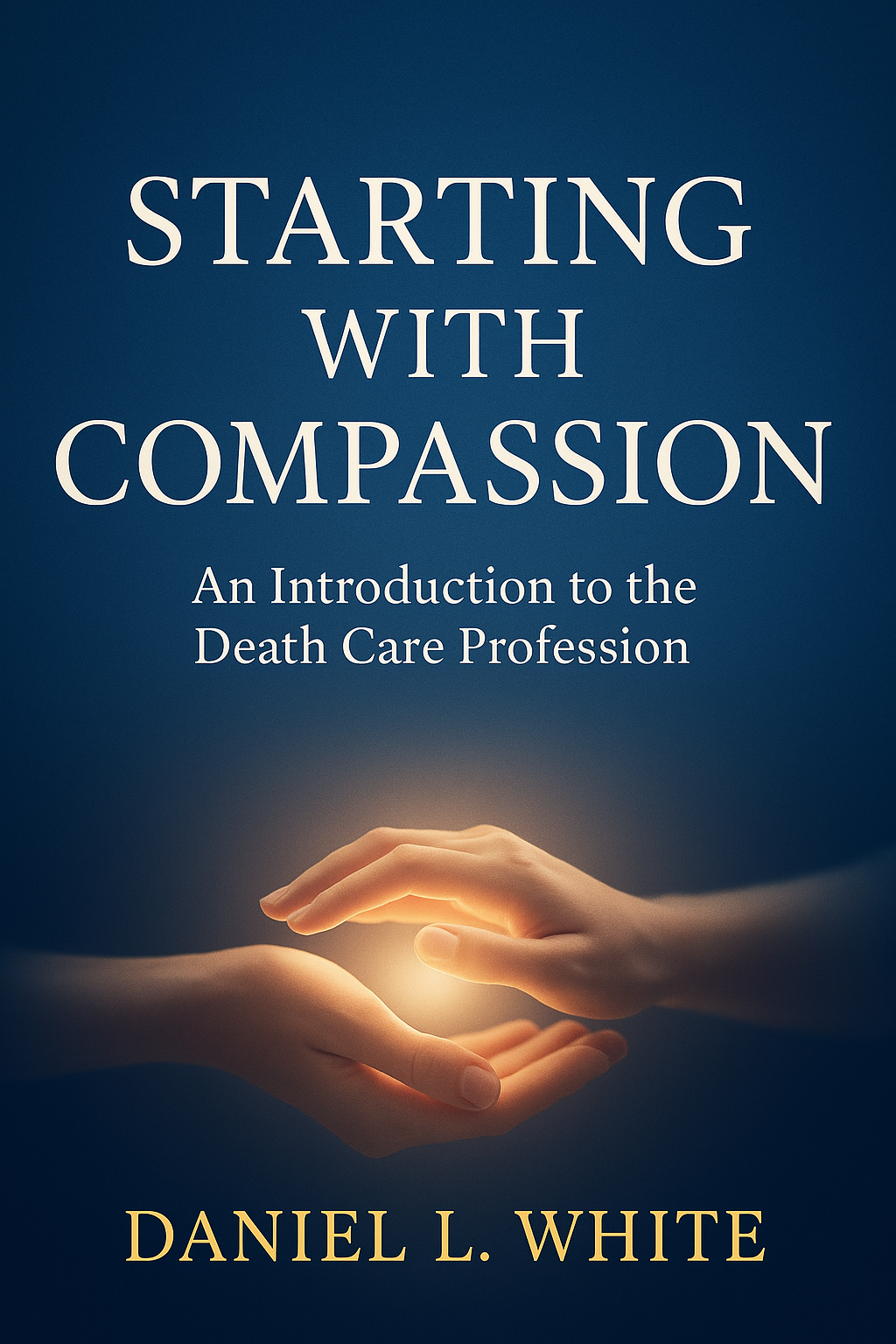
Starting With Compassion
An Introduction to the Death Care Profession
by Daniel L. White
The intellectual foundation of the CLN framework. Compassion is not a soft skill — it is a measurable, trainable, and deployable professional competency that determines whether a family leaves in peace, or in pieces.
Read the Book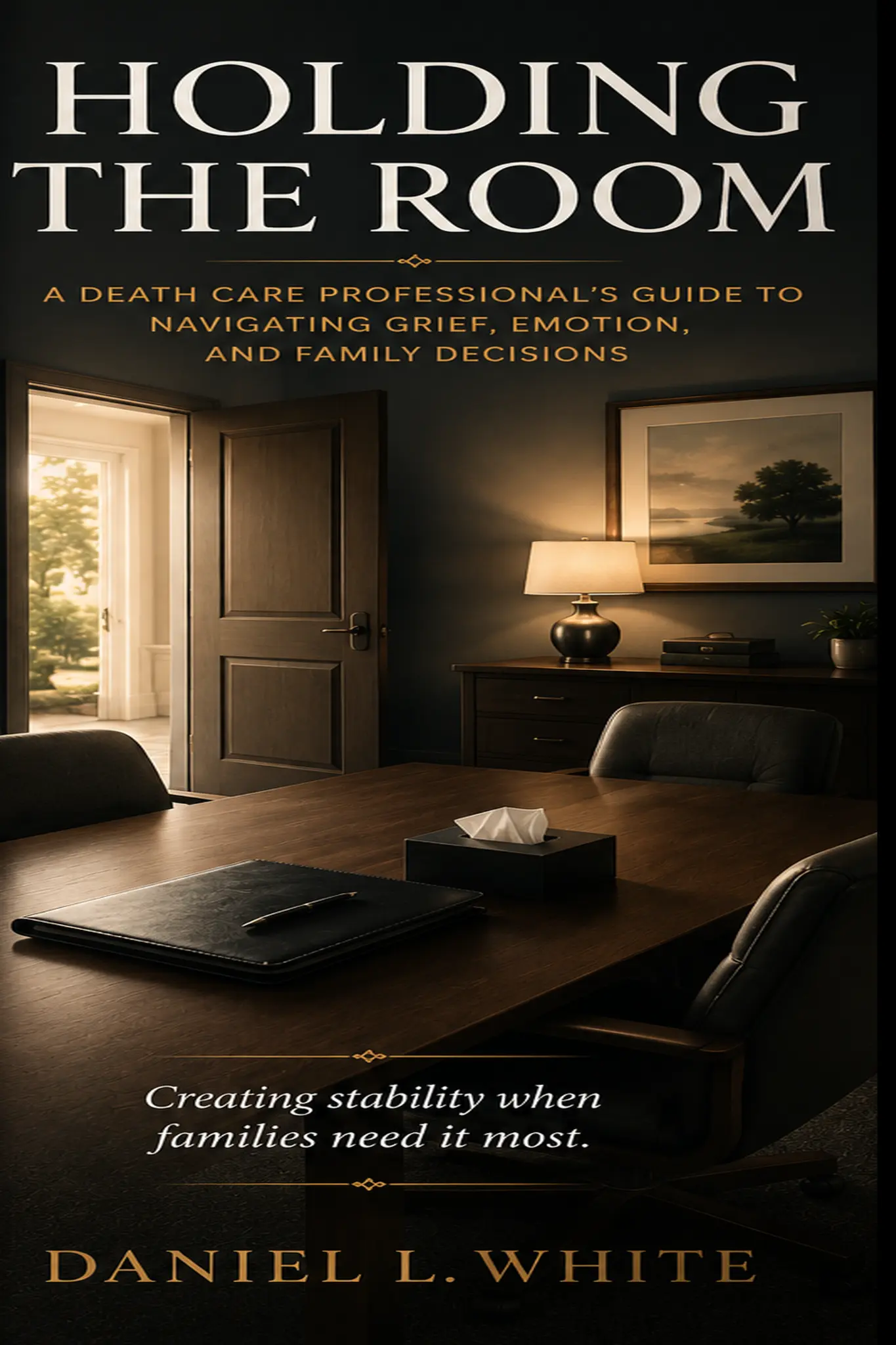
Holding the Room
A Death Care Professional's Guide to Navigating Grief, Emotion, and Family Decisions
by Daniel L. White
The practitioner's guide to the arrangement room. Information helps families understand their options. Compassionate stability helps families make decisions. This book is written for the professionals who learn to provide the second.
Get Notified